Limantepe—the oldest port on the Aegean Sea, off the coast of Urla
On the western coast of Turkey, in the coastal area of the town of Urla near Izmir, the remains of a port settlement that existed here for six thousand years lie submerged. Limantepe is not just a mound on the shore of the bay: it is one of the oldest known artificial ports in the Aegean Sea, established as far back as the Early Bronze Age and connecting Anatolia with the Cyclades, Cyprus, and possibly Thrace for centuries. Underwater expeditions since 1979 have uncovered vessels and anchors, Mycenaean-style pottery, and a wooden anchor from the 7th century BCE—presumably the oldest in the world. Limantepe remains an actively researched site, and each new season brings discoveries that reshape our understanding of prehistoric trade along the Aegean coast.
History and Origins of Limantepe
The settlement at Limantepe emerged around 6,000 years ago. Even in the earliest periods, there was a well-equipped port here with fortified walls that partially extended into the sea. Traces of the Chalcolithic (Copper-Stone Age) have been discovered, followed by successive cultural horizons of the three Bronze Ages and the Iron Age.
During the Early Bronze Age (c. 3300/3200–2000 BCE), Limantepe was part of the Anatolian trade network stretching from Cilicia through the Izmir region to Troy. This site traded with the Kastri culture—a settlement on the island of Syros in the Cyclades, dating to approximately 2500–2200 BCE. Both sites share similar fortification systems featuring horseshoe-shaped towers; the vessels are also of the same type—depas, bell-shaped cups, and incised pyxides, which experts describe as “entirely Anatolian in character.” The tin bronzes from both sites are also closely related. Trade connections extended across all of Anatolia, Thrace, and toward Mesopotamia.
During the Middle Bronze Age (first half of the 2nd millennium BCE), some of these ties continued, although the Assyrian trade network at that time covered primarily the Anatolian Plateau. The Late Bronze Age layer (14th–13th centuries BCE) is close to the Hittite period and the era of the Trojan War; artifacts from this period reflect cultural proximity to the Mycenaean world. Geographically, this region was part of the Kingdom of Myra—a vassal state of the Hittite Empire.
In the 7th century BCE, during the Ionian period, a wooden anchor from a merchant ship was discovered in coastal waters—one of the earliest in the world found during underwater excavations. In the 6th century BCE, the Lydian king Alyattes attacked the region, after which, during the Ionian Revolt, settlements were relocated: neighboring Clazomenae, for example, moved to the island. During the Hellenistic-Roman period, the Limantepe area was known by the Greek name Larissa (Larisa).
Architecture and What to See
Fortified Bronze Age Port
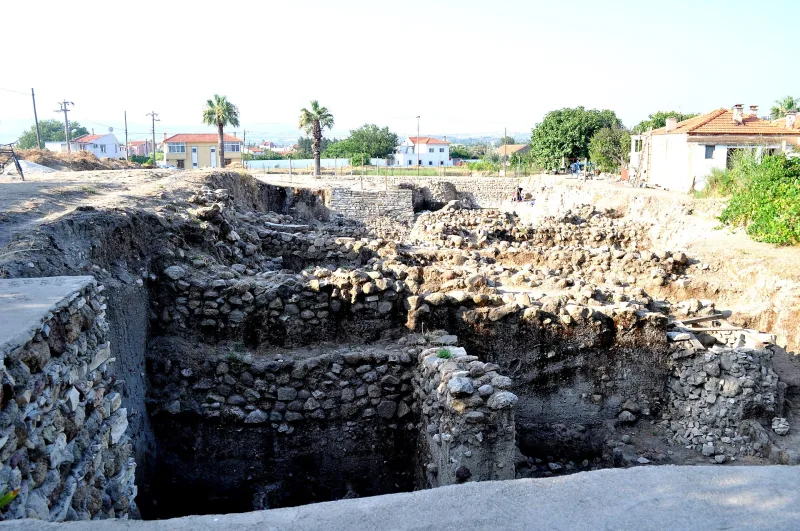
The most impressive feature of Limantepe is its Bronze Age port infrastructure. Part of the defensive wall lies underwater: a reminder that the level of the Aegean Sea has changed over the millennia. Underwater research has been conducted by divers since 1979—including students and specialists from the University of Haifa. Ships and urns found underwater indicate trade links with Greece and, possibly, with Cyprus and the Black Sea.
Three cultural layers plus earlier traces
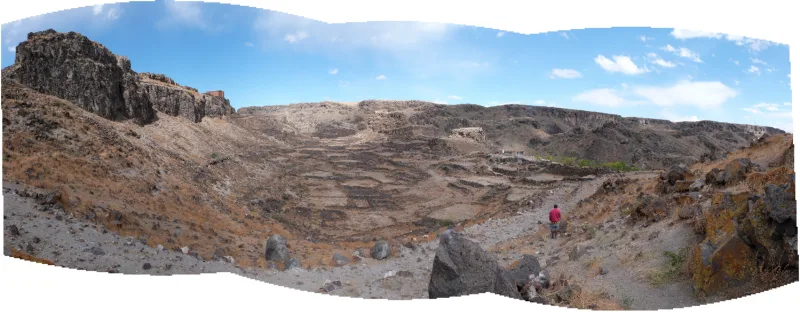
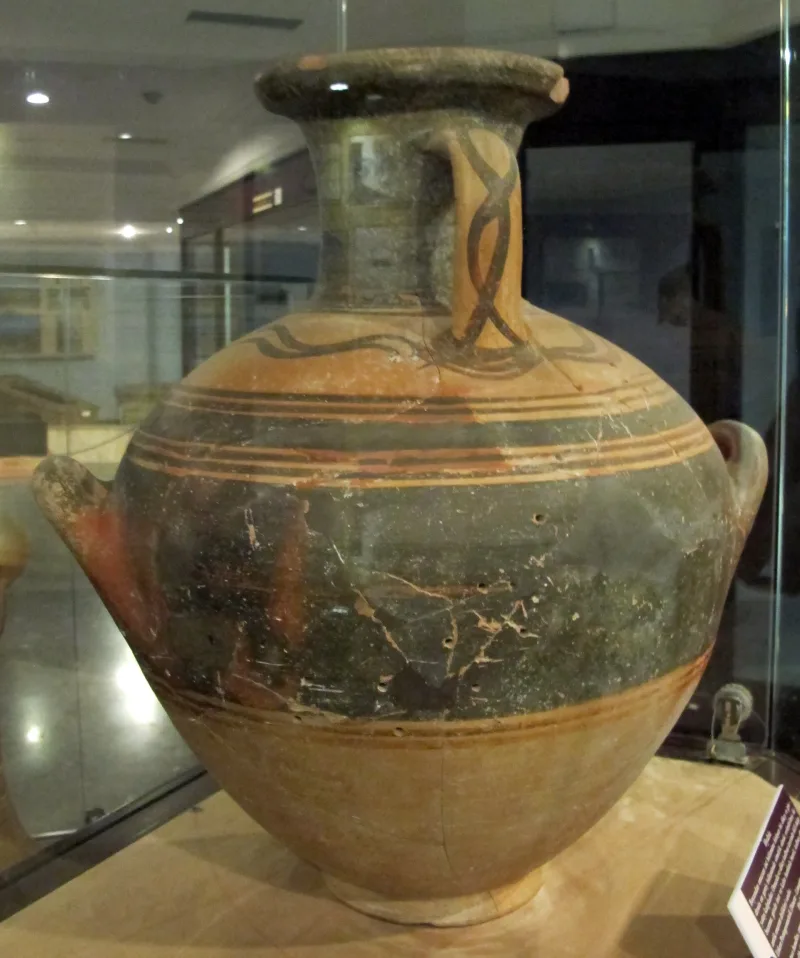
The onshore excavation reveals three distinct layers: Early Bronze Age (three phases, with the number expected to increase as work continues), Middle Bronze Age (five phases), and Late Bronze Age. Each layer is distinguished by its pottery, building types, and artifact composition. In the lower, Early Bronze Age layer, vessels were found with parallels in the Cyclades, at Troy, and at other sites in Anatolia—a tangible map of trade exchange.
A wooden anchor from the 7th century BCE
In 2007, during underwater research, a wooden anchor from a merchant ship dating to the 7th century BCE was discovered in the seabed sediments. Experts consider it one of the oldest surviving anchors in the world—a true sensation for marine archaeology. The find was recovered in strict accordance with underwater conservation protocols.
Connections to Tepekule and Panaztepe
The early layers of Limantepe demonstrate material connections with neighboring prehistoric sites: Tepekule and Bayraklı within modern-day Izmir (the future “Old Smyrna”) and Panaztepe at the mouth of the Gediz River. This allows Limantepe to be viewed not in isolation, but as part of a ramified network of settlements that collectively formed one of the most important cultural hubs of western Anatolia.
The İzmir Museum—the main repository of finds
Most of the artifacts from Limantepe are on display at the İzmir Archaeology Museum. A visit to the museum is a must for anyone who wants not only to see the hill with the excavation site but also to understand exactly what was found there. Of particular interest are the Bronze Age pottery specimens, comparable to their Cycladic and Trojan counterparts.
Interesting Facts and Legends
Limantepe is compact but rich in unexpected discoveries.
- Limantepe claims the title of the oldest known artificial port on the Aegean coast of Anatolia—and possibly the longest-inhabited settlement on the entire Aegean coast of the country.
- A wooden anchor from the 7th century BCE, found in 2007 during underwater work, is one of the contenders for the title of the world’s oldest anchor discovered during excavations.
- The parallels with the Cycladic site of Kastri are striking: similar bastion towers, similar pottery, and identical types of vessels. This clearly demonstrates that as early as the 3rd millennium BCE, the Aegean world was crisscrossed by trade routes.
- Excavations have been underway since 1979 and continue to this day; the number of phases in the Early Bronze Age layer is expected to increase as work progresses—in other words, the site has not yet been fully interpreted.
- Israeli divers and students from the University of Haifa participated in the research—a rare example of international underwater collaboration at a Turkish site.
How to get there
Limantepe is located in the Urla district, approximately 32 km west of Izmir. From Adnan Menderes Airport (ADB), rent a car or take a taxi to Urla (about 40 minutes via Highway D-300). Buses run from Izmir to Urla from the Üçkuyular bus station (south terminal); the site is about 3 km from the center of Urla—accessible on foot, by taxi, or via local transport.
GPS coordinates: 38°21′48″N 26°46′33″E. Limantepe is located right next to Klazomenai: both sites can be visited in a single day. The road is passable by a standard passenger car.
Please note: the active excavation site may be closed to visitors during the off-season. Before your trip, check the current access schedule through the Izmir Archaeological Museum or relevant Turkish sources.
Tips for travelers
Limantepe is a place for those seeking authenticity rather than the glamour of restoration. The site is active: during the season (April–October), archaeologists are at work, and you can sometimes watch the process live—which is impressive in itself. Access is limited in winter.
Visit in the morning: by noon in the summer, the heat becomes intense, and there is virtually no shade at the open-air site. Bring water, sunscreen, and closed-toe shoes. There are few informational signs; thorough preparation before your visit (including a trip to the Izmir Museum) will make your visit much more rewarding.
Limantepe is best experienced as part of a full-day itinerary that includes Klazomenai and a walk through Urla: the seafood restaurants in the city center make for an excellent finale. This is a route for the curious—the history of the Aegean coast literally begins here, at the very bottom of Limantepe.